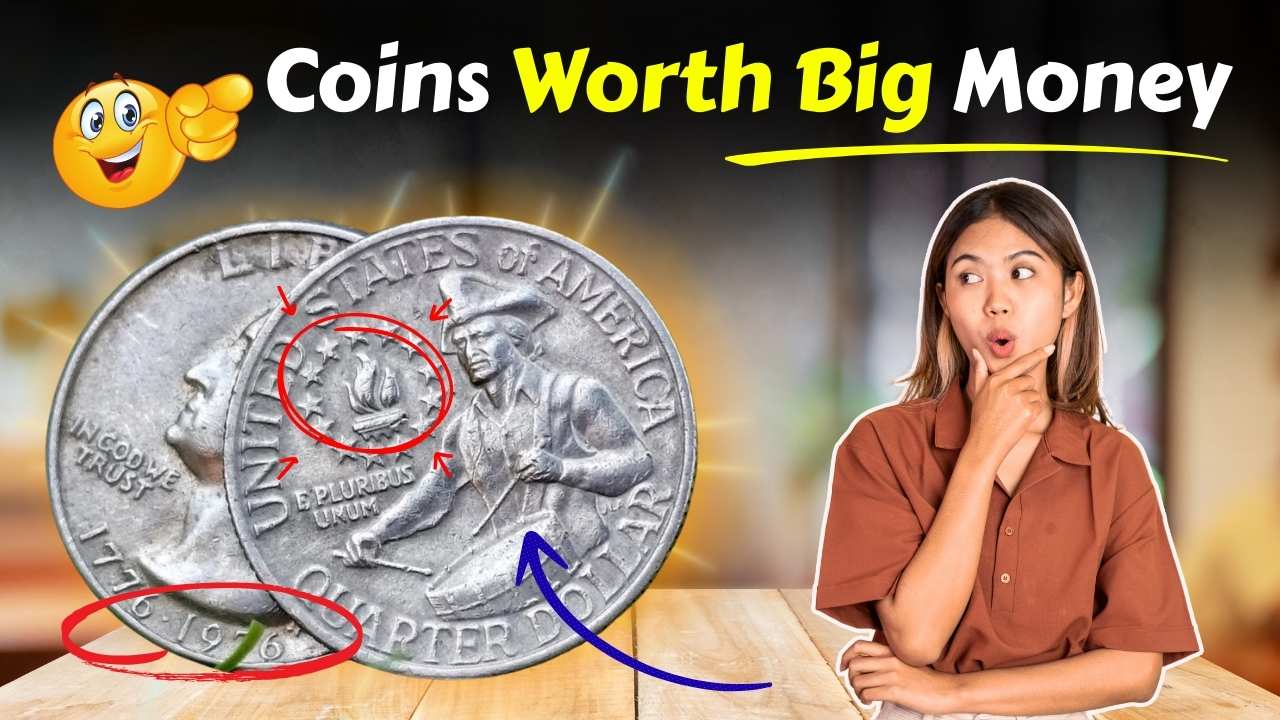
1776–1976 Quarter Dollar Value Guide Chart: The 1776–1976 quarter, better known as the Bicentennial quarter, remains one of the most talked-about coins in American numismatics. Issued to celebrate the United States Bicentennial, it features the distinctive drummer boy design that makes it instantly recognizable even to casual coin collectors. While most of these quarters are common and easily found in everyday circulation, certain rare varieties can be surprisingly valuable. A few exceptional examples have sold for thousands of dollars, and understanding which ones stand out can help collectors identify hidden treasures.
Many people assume that every Bicentennial quarter is valuable simply because it has a special design or carries a dual date. In reality, the vast majority are worth only their face value. However, minting variations, rare compositions, and striking errors make some versions significantly more desirable to collectors. Knowing how to differentiate a standard coin from a rare one begins with understanding the different types minted during the Bicentennial era.
Understanding the 1776–1976 Quarter
The Bicentennial quarter replaced the traditional eagle reverse with a colonial drummer boy, a design created to symbolize the American Revolution. All Bicentennial quarters were produced during 1975 and 1976, and none carry the year 1975. Instead, every coin from this series carries the dual date 1776–1976.
Three main varieties of the Bicentennial quarter were produced. The first is the copper-nickel clad version intended for daily use, minted at both the Philadelphia and Denver mints. The second and third varieties were created for collectors and contain 40 percent silver. These silver versions were issued in both uncirculated and proof formats and sold in special sets rather than released into circulation.
The key to spotting a valuable Bicentennial quarter is identifying the composition, mint mark, and any rare minting errors. While most clad quarters remain common, the silver versions and certain error coins can be worth far more, especially when preserved in high-grade condition.
Value Guide Chart for 1776–1976 Quarters
Although prices fluctuate with market trends and condition, the following chart gives a general idea of value ranges for different Bicentennial quarter types:
- Clad quarter from Philadelphia in circulation: worth face value.
- Clad quarter from Denver in circulation: worth face value.
- Uncirculated clad Bicentennial quarter: typically one to five dollars depending on grade.
- Silver uncirculated Bicentennial quarter: commonly four to ten dollars.
- Silver proof Bicentennial quarter: usually eight to fifteen dollars.
- High-grade deep cameo silver proofs: can reach much higher levels.
- Double die error quarter: values vary depending on doubling strength.
- Off-center strikes or clipped planchets: usually thirty dollars to over one hundred dollars.
- Unique or dramatic error varieties: can reach several hundred dollars or more.
These values provide a general starting point, though standout coins in exceptional condition or with extreme errors can be significantly more valuable. The rarest Bicentennial quarters are typically those struck on the wrong metal planchet or those showcasing dramatic striking flaws.
Rare Bicentennial Quarters Worth Big Money
Only a handful of 1776–1976 quarters fall into the category of true rarities. One of the most sought-after examples is a silver planchet error in which a circulation strike quarter was accidentally minted on a 40 percent silver blank. Because the mints kept silver and clad materials separate, this type of error is extremely rare. When discovered and authenticated, these coins can be worth thousands, depending on condition and uniqueness.
Another category includes major mint errors such as double die obverse or reverse coins. These display visible doubling on elements like the lettering or the drummer boy design. Since such errors occur during die creation, only a small number typically reach circulation before the mistake is corrected.
Striking anomalies such as off-center strikes and clipped planchets also attract strong interest. Off-center coins showing a clear date or significant design displacement often bring premium prices. Clipped planchet quarters, where a portion of the metal blank is missing, are also desirable and visually striking.
High-grade examples form another valuable category. A Bicentennial quarter in a top-level mint state or proof grade can far exceed the value of an ordinary uncirculated coin. Silver proof Bicentennial quarters with deep cameo contrast are particularly prized for their sharp definition and mirror-like finish.
How to Identify Valuable Bicentennial Quarters
Collectors hoping to discover a rare 1776–1976 quarter should begin by checking the coin’s edge. A silver quarter will be silver-colored throughout, while clad quarters show a copper stripe. Weighing the coin is another reliable method since silver quarters weigh slightly more.

Next, examine the mint mark. Philadelphia coins have no mint mark, Denver coins have a D, and San Francisco coins have an S. Only San Francisco produced the silver versions, making the S mint mark essential when searching for silver proofs and uncirculated silver examples.
Inspect the design closely, looking for doubling, misalignment, or missing sections. A magnifying glass can help identify subtle double die features or errors that aren’t immediately obvious. Pay attention to the drummer boy’s sticks, the lettering, and the date for signs of doubling or shifts in alignment.

Condition should never be overlooked. A well-preserved Bicentennial quarter with minimal marks and strong luster stands a much better chance of carrying value. Coins that appear unusually sharp or visually different from typical circulation pieces should be set aside for closer analysis.
Final Thoughts
The 1776–1976 Bicentennial quarter remains a fascinating piece of American history and a favorite among collectors. While most examples hold little more than face value, certain varieties can be quite valuable. Whether the rare coin is a silver planchet error, a dramatic minting mistake, or a pristine high-grade proof, these special pieces add excitement and variety to the world of coin collecting.
Taking time to learn the differences between standard and rare Bicentennial quarters can help collectors spot valuable pieces in everyday change, inherited collections, or older coin jars. With careful observation and a bit of curiosity, anyone might uncover a Bicentennial quarter worth far more than expected.
Disclaimer
The information in this article is meant for educational and general reference purposes only. Coin values vary based on condition, authentication, market demand, and grading standards. Prices mentioned are approximate and should not be taken as financial advice. Anyone who believes they have a rare or valuable coin should consult a professional grader or reputable coin dealer for an accurate evaluation.