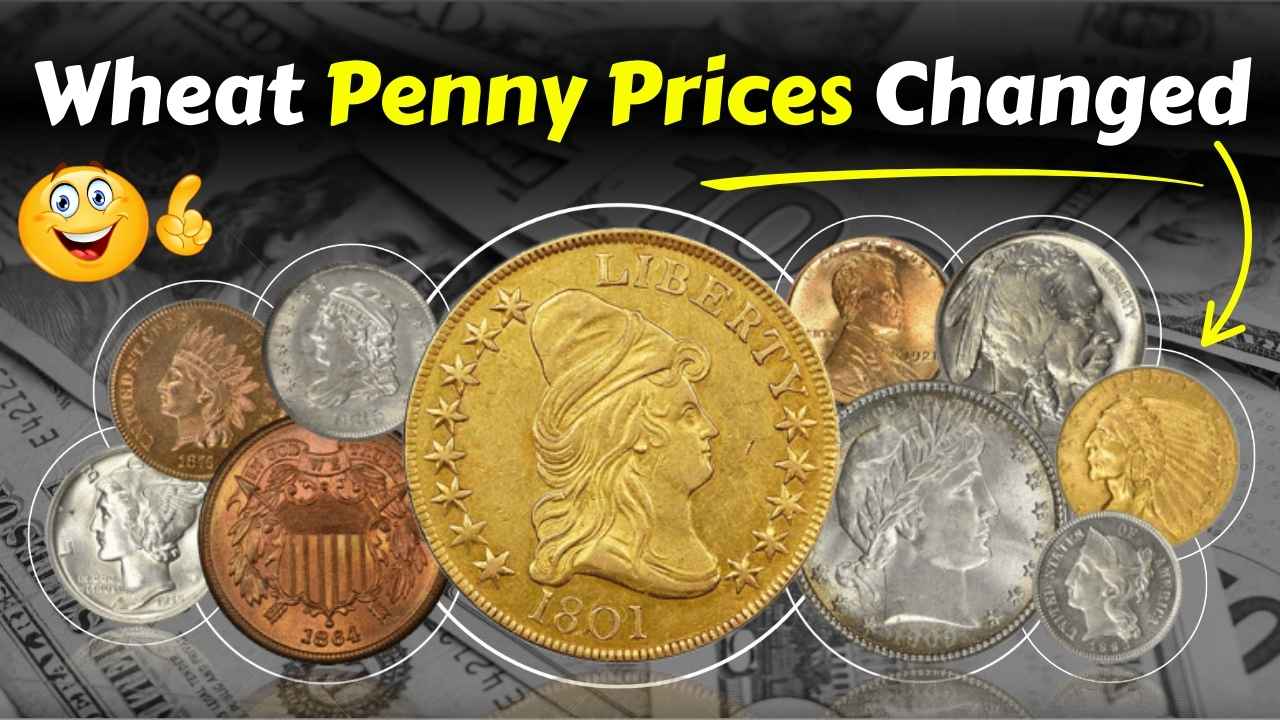
How Wheat Penny Prices Changed Over the Last 10 Years: The Wheat Penny, introduced in 1909 and minted until 1958, remains one of the most iconic and beloved coins in U.S. numismatics. Over the past decade, the value of these pennies has fluctuated due to several factors, including the coin’s age, rarity, condition, and the growing interest in coin collecting. Whether you’ve stumbled upon a jar full of old pennies or are considering investing in these historical treasures, understanding how Wheat Penny prices have evolved can give you valuable insights into the state of the coin market today.
The Rise of Wheat Penny Prices in the Last Decade
In the past 10 years, Wheat Penny prices have generally seen a gradual increase, especially for certain key dates and rare varieties. The steady rise can be attributed to the increasing popularity of coin collecting, the value of copper in older coins, and the appreciation for historically significant items. As more collectors enter the market and the number of well-preserved coins decreases, rare Wheat Pennies especially those in excellent condition are becoming harder to find, which in turn increases their value.

For instance, coins from years with lower mintage figures or those with unique errors have steadily increased in value. A standard Wheat Penny from the 1940s, which was once worth just a few cents, may now sell for a few dollars depending on its condition. However, rarer coins, such as those from the 1909-S VDB or the 1914-D, have seen far more dramatic price jumps, with well-graded examples fetching prices well into the thousands of dollars.
Key Factors Affecting Wheat Penny Prices
Several factors have contributed to the fluctuation of Wheat Penny prices over the last decade. These include the age of the coins, their condition, the rarity of specific years or mint marks, and the demand from collectors.

1. Coin Condition
The condition of a Wheat Penny is one of the most important factors affecting its value. Coins are graded on a scale from “poor” to “mint state” (MS-70), with higher grades indicating coins in better condition. Over the past decade, high-grade Wheat Pennies, particularly those in MS-65 or higher, have become more valuable. As the coins age and more circulate through the economy, well-preserved examples become rarer, which increases their value in the marketplace.
A 1914-D Wheat Penny in fine condition might be worth a few hundred dollars, but a specimen in MS-64 could see its price increase significantly. The demand for coins with sharp details, clear minting, and minimal damage has driven up prices, particularly in the higher grades.
2. Rarity of Specific Dates and Mint Marks
The rarity of certain years or mint marks also plays a crucial role in determining the price of Wheat Pennies. For example, the 1909-S VDB is one of the most famous and sought-after Wheat Pennies due to its low mintage and the involvement of designer Victor David Brenner’s initials on the reverse. In the last 10 years, this coin has become increasingly valuable, with prices for high-quality specimens reaching over $1,000.
Similarly, the 1914-D is another key date that has seen significant appreciation in value over the past decade. With a mintage of just over 1 million coins, this year is highly sought after by collectors. A 1914-D in good condition used to be a few hundred dollars, but prices for well-graded examples have soared, sometimes exceeding $1,500 or more.

Other notable years, such as the 1922 No D and the 1931-S, have also experienced price increases due to their rarity and the limited number of high-quality specimens available.
3. Copper Value
While the face value of a Wheat Penny is just one cent, its copper content has also influenced its price. As copper prices have increased in recent years, so has the intrinsic value of the metal in these coins. A Wheat Penny contains 95% copper, and as the price of copper rises, so does the potential worth of the coin’s metal content.

While most Wheat Pennies are not worth significantly more than their face value unless they are in excellent condition or are rare dates, the rise in copper prices over the past decade has meant that even lower-grade pennies can be worth slightly more than just one cent. As copper continues to fluctuate in price, the value of the metal content in older coins remains an important factor in their overall price.
The Impact of the Growing Collecting Community
In the last 10 years, there has been a growing interest in coin collecting, both among seasoned numismatists and younger collectors. This has led to an increase in demand for Wheat Pennies, especially for rarer dates, mint marks, and high-grade examples. The ease of access to online marketplaces, auction sites, and coin grading services has allowed collectors to buy and sell coins more easily, further driving up prices for certain Wheat Pennies.

The accessibility of information, including detailed coin guides, online databases, and social media groups, has also helped inform collectors about which dates and varieties are most valuable. As a result, demand for key coins like the 1909-S VDB, 1914-D, and 1922 No D has surged in the last decade, pushing prices for these rare pennies higher.
Wheat Pennies in 2026: What to Expect
Looking ahead to 2026, it is expected that Wheat Penny prices will continue to rise, especially for coins in excellent condition and those from rare years. As more coins become worn or lost to history, the available supply of well-preserved Wheat Pennies will continue to decrease, driving up demand for high-quality examples.

The price of certain key dates, such as the 1909-S VDB or the 1914-D, could continue to increase as collectors look for those elusive coins to complete their sets. Coins that have been well-preserved, particularly those in MS-65 and higher, will likely see the most significant price growth.
Additionally, as collectors become more focused on completing their Wheat Penny collections, the demand for more common coins will also grow. While the more common years like 1940s and 1950s Wheat Pennies may not reach the same high values as rare key dates, they may still see a gradual increase in price as interest in the series continues to grow.

Conclusion
The last decade has seen significant shifts in Wheat Penny prices, with many rare examples reaching new price heights. The combination of scarcity, condition, and collector demand has created a strong market for these historical coins. Key dates, mint marks, and well-preserved specimens have seen the most significant increases in value, with some coins worth hundreds or even thousands of dollars. Looking ahead, the continued rise of coin collecting and fluctuations in the metal market will likely keep Wheat Pennies on collectors’ radar for years to come. Whether you’re a long-time collector or just starting, it’s clear that the value of these coins has steadily increased, and the next decade promises to bring even more surprises for Wheat Penny enthusiasts.
Disclaimer
This article is for informational purposes only. Coin values can fluctuate based on market conditions, coin condition, rarity, and collector demand. Always consult a professional numismatist or certified grading service before buying, selling, or determining the value of any coin.